
PAED: Rehabilitation Oculomotor Screening Evaluation (ROSE) adapted for the pediatric population - PedROSE
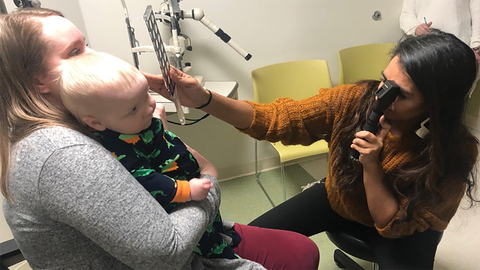
PAED: Rehabilitation Oculomotor Screening Evaluation (ROSE) adapted for the pediatric population - PedROSE
1 hour
Overview
Oculomotor functions (OMF) including skills such as saccades and smooth pursuits are essential for maintaining visual stability. In elementary school-aged children, impairments in these functions (oculomotor dysfunction, or OMD) can negatively impact academic performance, particularly in activities requiring visual tracking, such as reading and sports. However, most existing OMF screening tools are designed for adults, creating challenges for clinicians working in pediatric settings.
This webinar will present the development of a novel clinical screening tool, the PedROSE, specifically designed to assess oculomotor function in elementary school-aged children. Using a mixed-methods approach, the study incorporated a comprehensive literature review alongside feedback from pediatric physical and occupational therapists at the Jewish Rehabilitation Hospital. Insights were gathered through surveys, in-service discussions, and hands-on clinical testing with children.
Findings demonstrate that the PedROSE is a feasible and practical tool for pediatric use. The session will highlight key learnings from clinician feedback, outline refinements made to the tool, and present the final version of the PedROSE.
Learning Objectives
- Understand the concepts of ocular motor function that can be tested clinically by therapists
-
Perform the Rehabilitation Ocular Motor Screening evaluation (ROSE). The participant will need topractice post webinar to improve their proficiency in using the ROSE
- Understand the steps needed to develop a clinical quantitative therapeutic tool
Speaker Biography
Elizabeth Dannenbaum began working at the Jewish Rehabilitation Hospital in Laval, Canada as a clinical research associate and physiotherapist in the vestibular program in September 2000. Elizabeth’s interest focus on clinical assessment and treatment tools for people with vestibular deficits. This includes developing a novel evaluation of visual vertigo (dizziness provoked in dynamic visual environments) and furthering the understanding of the clinical visual-vestibular interactions. Her other special interests are in the area of vestibular impairment in the pediatric population. Lately she is working on developing a clinical objective assessment tool to screen oculomotor function in adults and children.
Cost
- Free for Paediatric Division members
- $10 for CPA members (not members of the division)
- $25 for non-members
The instructors

The Paediatric Division is a special interest group within the Canadian Physiotherapy Association. Our membership consists of clinicians from all practice settings, students, educators, researchers, physiotherapy assistants and administrators all of whom have a passion for promoting participation and enhancing the lives of children and their families. We are dedicated to provide resources and information for paediatric patients and their families to promote participation and function independence in all aspects of life.
Paediatric physiotherapists employ clinical expertise in the early detection of health problems, treatment, education and management of congenital, developmental, neuromuscular, skeletal, cardiorespiratory or acquired disorders/diseases. Paediatric physiotherapists work with children of all ages, from infants through young adulthood to promote participation and functional independence. Paediatric physiotherapists have a unique role in that they not only work with the child, but also their families in the context of their daily home, school and recreational environment.
Paediatric physiotherapists use validated outcome measures to assess the level of strength, flexibility, gross-, and fine-motor coordination and overall functional capabilities to determine participation limitations or restrictions as a result of injury, disease or disability.
Through analysis of objective assessment findings, the paediatric physiotherapist uses evidence-based treatment interventions specifically tailored to the client and their family's goals. Treatment interventions focus on improving gross and fine motor skills, balance and coordination, strength and endurance, as well as cognitive and sensory processing/integration.